Showing posts with label Dan Vera. Show all posts

Thursday, February 22, 2018

Split This Rock at AWP in Tampa - March 7–10, 2018

Split This Rock will be at the Association of Writers and Writing Programs Conference (AWP) taking place March 7-10 in Tampa! 

If you're attending, we hope you'll join us to celebrate Split This Rock's 10th anniversary as we rededicate ourselves to poetry that bears witness to injustice and provokes social change. Check out all the details below! (See the AWP website for more on the conference.)

Visit Split This Rock at 
AWP Table #T603


Visit Split This Rock at Table #T603 in the AWP Conference Bookfair, where you can meet and hang out with Split This Rockers, write a haiku post card to elected officials demanding gun control, buy a T-shirt, mug, or notecards with beautiful artwork with Split This Rock co-chair Dan Vera, pictured above and excerpts from poems in The Quarry, and enter a drawing for a free registration to Split This Rock Poetry Festival 2018 featuring Elizabeth Acevedo, Kazim Ali, Ellen Bass, Sherwin Bitsui, Kwame Dawes, Camille Dungy, Ilya Kaminsky, Sharon Olds, Sonia Sanchez, Solmaz Sharif, Terisa Siagatonu, Paul Tran, and Javier Zamora. We look forward to seeing you! 

**
Split This Rock 10th Anniversary Reading at AWP!


Thursday, March 8 at 10:30 AM - 11:45 AM
Tampa Convention Center, First Floor, Room 20 & 21

In their last year of leadership, Split This Rock Executive Director Sarah Browning and long-time Board Chair Dan Vera will read with two poets whose work and spirit are central to Split This Rock, Franny Choi and Cornelius Eady. Also performing with Cornelius will be musicians from the Cornelius Eady trio.

Sarah Browning is co-founder and Executive Director of Split This Rock: Poetry of Provocation & Witness. Author of Killing Summer and Whiskey in the Garden of Eden, and co-editor of three special issues of Poetry magazine, she co-hosts Sunday Kind of Love at Busboys and Poets in Washington, DC.

Franny Choi is the author of Floating, Brilliant, Gone. She has received awards and fellowships from the Rhode Island State Council on the Arts, the Poetry Foundation, and Kundiman. She is a Project VOICE teaching artist and a member of the Dark Noise Collective.

Cornelius Eady is the author of eight poetry collections including Victims of the Latest Dance Craze, winner of the 1985 Lamont Prize, and Brutal Imagination. He holds the Miller Chair at the University of Missouri and is co-founder of Cave Canem.

Dan Vera is co-editor of Imaniman: Poets Respond to Gloria Anzaldúa and author of two books of poetry, most recently Speaking Wiri Wiri. Winner of the 2017 Oscar Wilde Award and Letras Latinas/Red Hen Poetry Prize, his poetry appears in various publications and university writing curricula. He now co-chairs the board of Split This Rock.

Learn more on Facebook


Ghost Fishing: An Eco-Justice Poetry Anthology Book Launch & 10th Anniversary Celebration


Friday, March 9 at 5:30 PM - 7:30 PM
The Attic Cafe
500 E Kennedy Blvd, Suite 400, Tampa, Florida 33602

Come celebrate the launch of Ghost Fishing: An Eco-Justice Poetry Anthology and Split This Rock’s 10th anniversary! Hosted by Melissa Tuckey, Editor, and Co-Founder of Split This Rock. This ground-breaking book of poems brings social justice to the forefront of eco-poetry and offers a rich terrain of culturally diverse perspectives. 

Readers include Jennifer Atkinson, Sarah Browning, Camille Dungy, Kathy Engel, Jennifer Foerster, Ann Fisher-Wirth, Allison Hedge Coke, Tiffany Higgins, Brenda Hillman, Philip Metres, Lenard Moore, Aimee Nezhukumatathil, Emmy Pérez, Danez Smith, Pam Ushuck, Dan Vera, and Javier Zamora. 

This off-site event is free! Full cafe menu will be available for purchase, including beer and wine. Within walking distance of the convention center and conference hotel. Wheelchair accessible.

Learn more on Facebook

Thursday, June 25, 2015

The Quarry & the Poetry of Social Justice


by M. F. Simone Roberts, Split This Rock Poetry & Social Justice Fellow

Split This Rock established its spirit, indeed its name, with inspiration from the Langston Hughes poem “Big Buddy,” at its heart a poem about community and resistance to injustice:

Don’t you hear this hammer ring?
I’m gonna split this rock
And split it wide!
When I split this rock,
Stand by my side.

In the year and a half that I have volunteered with this organization, I’ve found myself welcomed into a community of poets and activists, and activist poets, who support and encourage each other in both word and deed. We do stand by each other’s sides splitting the rocks of recalcitrant social problems and oppressive ideologies, and the rocks of that sometimes recalcitrant white page, the living earth of our languages.

Even the word for unwanted resistance is connected to rocks and mineral world, the “cal” in “recalcitrant” reminds us of calcium – our very bones.

As we mulled names for this database of social justice poetry we kept coming back around to the suggestion of one of our Board members, the poet Dan Vera, who offered “The Quarry” early in these discussions. And then, serendipity told us to stop fighting that first, right instinct when Sarah Browning, our Executive Director, remembered Carolyn Forché’s poem “The Museum of Stones,” read at the first Split This Rock Poetry Festival back in 2008.

In that poem is the line, “all the world a quarry” and it all came together. The Quarry: A Social Justice Poetry Database. Done. The quarry is a resource we go to build our cities and communities, but it is also the place we are sometimes sent in punishment for our resistance to oppressive regimes. The world as problem, and the solution to the problem, the stone that builds the prison and the stone that crashes a window wrapped in a petition for freedom.

To our joy, those who have visited The Quarry in just its first day have divined its purpose perfectly. Larry Ferlazzo at EDUblogs.org instantly saw its uses as an educational resource. White Cross School quickly discovered the Geography search and located two local North Carolina poets to shout out. Joseph Ross sees The Quarry in several dimensions:

As a teacher, I know I will use this database to share poems with my American Literature students as well as with my Creative Writing students. As a poet, I know I will browse these poems to see what others are writing, how they approach different topics and issues in American life. As a reader of poetry, I will savor these poems as a personal call to work for justice more effectively in the world.

Over at Harriet, the blog of The Poetry Foundation, the staff go right to the heart of our mission: celebrating the enormous power of “the imagination to transform the individual and society.” Poetry, social justice poetry, is where our imaginations do not fail us.

Ron Charles of The Washington Post asked us an important question in The Style blog. Duly impressed with the search feature of the database, he notes  “users can find poems by selecting from a list of more than 40 different themes and issues, such as Animal Rights, Environmental Justice and Police Brutality” and by “ the writer’s identity from a checklist that includes Disability, Race, Gender, Religion and Class.” 

Charles worries, though, that while “It’s a curious idea, helpful on its face,” it may run the risk “of reducing poetry to polemics and biography?”

Bringing poetry to the center of public life means that while we think of it as poetry – indeed, one of our goals at Split This Rock is to expand the notion of what a “political poem” can be even as we think of it as messages to the society, about all its peoples and ways of life. 

So under a category like “LGBTQA,” you’ll find poems that address mild and violent kinds of homo- or trans- phobias, but also vibrant celebrations of love and sex and self and humor from inside the LGBTQA communities, and by their allies, or poems that touch on a number of themes just one of which has to do with identity.

But, Charles’s hesitation is a frequent and common one, that is to say -- real. Political poetry, poetry that does a job like point to injustice or witness human resistance must sound like politics – like argument, like spin, like propaganda. It can, of course. And those poems have their place. Sometimes at the rally, we just need the point to get across. 

But, some poems make their point not by argument, but by affect, by appeal directly to our human being. The recent poem of the week, “Blk Girl Art” by Jamila Woods is one of these, coming as it does in response to the everyday, every day pressures of surviving while black in America:

Poems are bullshit unless they are eyeglasses, honey
tea with lemon, hot water bottles on tummies. I want
poems my grandma wants to tell the ladies at church
about. I want orange potato words soaking in the pot
til their skins fall off, words you burn your tongue on,
words on sale two for one, words that keep my feet dry.

It admits in the same breath that poems need to do work in a world of hardship, and that comfort and kindness are possible in that work. 

Or take the mini-epic of Tim Seibles’s “One Turn Around the Sun,” read at the 2014 poetry festival, which blends the necessity and courage of resistance, “of biting something ten thousand times your own size as if to say ‘get off me!’” into the whole heart of human being.

As the Poetry & Social Justice Fellow at Split This Rock, it was my job, honor, and pleasure to archive and categorize each of these poems, and I know that they are polemics in the way excellent poetry is polemic, like Milton’s Paradise Lost, which meant to “teach the ways of God to Man” by making of the truth an art. There’s more than one clever argument made about power and rebellion in that poem.

The poetry of social justice is poetry. Social Justice poetry exhibits its craft and art on the page, and on the stage.  When Split This Rock says its taste in poetry is catholic, we mean that. Social Justice Poetry comes to us in the lineage of the traditional canons like Forchés “poetry of witness”, from the experimental traditions like the work of Anne Waldman, from the street and spoken word traditions, from the stories of Indigenous peoples…. 

When we begin to look at poetry as people who live for justice, we begin to hear the themes in poems we never thought were so radical, so committed.

These are your poems. You wrote them. Or you will read them. To learn craft. To seek comfort. To confront danger. To learn from difference. To celebrate the radical act of staying alive, joyful, fierce. You will share them with friends, declaim them at demonstrations, croon them at memorials. You will use them to center and inspire your colleagues at work, in community organizing, at worship. 

They are yours. Go, imagine with them. 

M. F. Simone Roberts is an independent scholar of poetics and feminist philosophy, a poet and activist. She is co-editor of the anthology Iris Murdoch and the Moral Imagination: Essays and author of the monograph A Poetics of Being-Two: Irigaray's Ethics and Post-Symbolist Poetics. Descendant of aristocrats and serfs, she adventures with her consort, Adam Silverman.

Monday, December 9, 2013

Split This Rock Recommended Poetry Books of 2013

2013 was an extraordinary year for poetry! Choosing books for Split This Rock's fourth annual "recommended" list was harder than ever -- an embarrassment of riches to choose from. Poets are writing daring, innovative, gorgeous books that challenge the status quo and remind us of the power of language to wake us up, to give us strength.

Over the course of the past year we have felt immensely lucky to read and treasure new books of poetry of provocation and witness, and we're delighted to be able to recommend the following list to you today. We invite you to shop your local independent bookstore, Teaching for Change’s Busboys and Poets Bookstore, or Powells.com for all your poetry-loving (and soon-to-be-poetry-loving) family and friends.

We also know this list is by no means comprehensive. Please "comment" below to help build the e-library of essential 2013 books. Thank you!

Yvette Neisser Moreno and Sarah Browning compiled the list this year.

Split This Rock Recommended Poetry Books of 2013

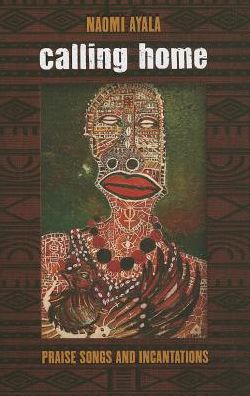
Calling Home: Praise Songs and IncantationsCalling Home: Praise Songs and Incantations, Naomi Ayala (Bilingual Review Press)
“Ayala does the best that poetry can do. She is the poet to whom things speak, no matter how they are called. . . . Simply put, Calling Home is the best book of poetry you’ll read in a long time, by a Latina or any other.” –Lorna Dee Cervantes
The Switching/Yard, Jan Beatty (University of Pittsburgh Press)
“One of Pittsburgh’s most dynamic poets ‘juxtaposes lyricism with brutality’ as she navigates the human heart. … Beatty mixes the real and the unreal in her portraits of life in Pittsburgh, her search for her birth family, and her musing on the gods that guide and torment us." –Hester Kamin, Pittsburgh Post-Gazette
What We Ask of Flesh, Remica Bingham (Etruscan Press)
“[F]ew crimes are as consequential as those committed to our bodies, and this is the great weight of Remica L. Bingham’s powerful new book What We Ask of Flesh. Bingham profiles many women and girls, all victims of rape or other physical abuses, to revive them (and her audience, I suspect) to consciousness.” -Marianne Kunkel, Prairie Schooner
Star of David, Rick Black (Poetica Magazine Chapbook Contest Winner, Poetica)
“Rick Black writes with the honed elegance of a poet so in command of lyric sentiment and the efficient evocative use of language that what results is indeed as urgent and vulnerable as true prayer ... There is something profoundly human and completely necessary about Star of David.” - Kwame Dawes
Icarus in Love, Antoinette Brim (Main Street Rag)
“Antoinette Brim's Icarus in Love is a stellar collection full of the mythology of living. Utilizing vibrant, recurring images that braid their way through our hearts and memories, Brim raises hard questions of survival and offers hope to us all.” -Jacqueline Jones LaMon
After This We Go Dark, Theresa Davis  (Sibling Rivalry Press)
“I felt like this book was written for me. [Davis] tackles everything I process as a Queer Black single mother dealing in love, politics, transitioned loved ones, sensuality, missed opportunities, and reclaimed empowerment.” -Wise Edits
\blak\ \al-fe bet\: Poems, Mitchell L. H. Douglas (Persea)
“Haunted by questions of contemporary blackness, this second book by Douglas is packed with risk and conflict, but also beauty.” -Publishers Weekly
Unpeopled EdenUnpeopled Eden, Rigoberto González (Four Way Books)
“The latest from the energetic and versatile Gonzalez (Black Blossoms) has a tight focus with potentially a broad appeal: its four long poems look hard at the victims and the antiheroes of the U.S.–Mexico border troubles … He also never limits himself to one subject, working hard to let in all the readers he can.” –Publishers Weekly

Autogeography, Reginald Harris (Cave Canem Northwestern University Press Prize Winner)
“In Autogeography, Harris gives us the gift of quickening the treasure of black culture in poems that touch the enduring spirit of black people. … The poet celebrates black life and the way it connects to humanity, the bright woven cloth of all our lives.” –Afaa Michael Weaver
Hemming the Water, Yona Harvey (Four Way Books)
“There is no rest in this extraordinary debut book by Yona Harvey. It is a book in which the devastation is still very much alive. … We are taken to dizzying uncertainties, a place between what’s real and what isn’t, what’s intimate and what’s strange, between evil and good.”
–Toi Derricotte
Kohl and Chalk, Shadab Zeest Hashmi (Poetic Matrix Press)
“The bride who contemplates her half paralyzed face on the eve of marriage … is emblematic of the larger story of Pakistan: an ancient culture fractured by new and divergent identities. The poet, like the bride whose face is divided into ‘lit’ and ‘dim’ halves, gazes into the mirrors of history and politics to make sense of the disjunctive parts that refuse to come together as a whole.” (Publisher’s synopsis)
Senegal Taxi, Juan Felipe Herrera  (University of Arizona Press)
“This [is a] startling new collection of poems in prose and verse in which [Herrera] adopts the voices of those suffering through or perpetrating the violence that has racked Sudan.  … Herrera has the unusual capacity to write convincing political poems that are as personally felt as poems can be.” –NPR
Pitch Dark Anarchy, Randall Horton (TriQuarterly/Northwestern University Press)
“These are poems of breakage and re-assemblage, dislocation and re-affirmation… I admire the verve and the intellect, a voice poised on the edge of a precipice, speaking what is new.”
Mead Magazine
The Only Thing That Matters, Kim Jensen (Syracuse University Press)
“In a time when the ordinary and the predictable prevail in poetry, this collection by Kim Jensen gives us a truly original poetry of witness. … Finely crafted and marvelously inventive, these poems sing and hiss and howl. They enliven and push and love.” –Naomi Ayala
Darktown Follies, Amaud Jamaul Johnson (Tupelo Press)
“Poses as a kind of mock minstrel show, one that records the ways in which blackness and black Americans have been exploited for the sake of entertainment.” – Slate
Render, Collin Kelley (Sibling Rivalry Press)
“An autobiography in verse, Render ... is one of the best, if not the best, poetry book I have read this year.  ... [T]he poems in Render give readers a good idea of what it is like to grow up gay in America.” –Helen Losse, Wild Goose Poetry Review
Black Stars, Ngo Tu Lap, trans. from Vietnamese by Martha Collins (Milkweed)
“Reading Ngo Tu Lap’s poems, terrible nostalgia wells up in me— nostalgia for a lost time and a far-gone country, nostalgia for people I’ve loved, and for creatures of forests and rivers. … I feel gratitude too. War is over. Peace arrives with these beautiful poems.” –Maxine Hong Kingston
The Big Smoke, Adrian Matekja (National Book Award Finalist, Penguin)
“Jack Johnson, the first African-American world heavyweight champion, is a figure of mythological proportions; in this new collection, poet Adrian Matejka gives the boxer a voice that's wholly human. The poet examines race and racism from Johnson's singular perspective.”
Hum, Jamaal May (Beatrice Hawley Award Winner, Alice James Books)
“Linguistically acrobatic, these poems render the violence of a body’s undoing—by war, by drugs—and the mind’s in ways that are beautifully crafted … This book relentlessly explores power and forgiveness, love and fear.” -Publishers Weekly
SHE HAS A NAME, Kamilah Aisha MoonShe Has a Name, Kamilah Aisha Moon (Four Way Books)
“The opening pages of She Has a Name identify the collection as a ‘biomythography,’ a term created by Audre Lorde to describe a narrative based on myth and history, fact and fiction. Kamilah Aisha Moon’s biomythography tells the story of a young woman with autism from multiple points of view.” (Publisher’s synopsis)
The Light of the Storm/La luz de la tormenta, Carlos Parada Ayala (Zozobra Publishing)
“Carlos Parada Ayala’s inventive and even startling language makes new the immigrant tale, the worker’s struggle, the lover’s terror. I would follow this poet anywhere.” – Sarah Browning
Kind, Gretchen Primack (Post Traumatic Press)
“Everything is intentional in the landscape of this well-structured volume. For Primack, the rights of animals are human rights, and vice versa.” - Pank
Gospel of Dust, Joseph Ross (Main Street Rag)
“As with all burnt offerings, in Joseph Ross’ poems something is also rising. We are offered again the stark choice: ashes or bread?” - Rose Marie Berger
Calendars of Fire, Lee Sharkey (Tupelo Press)
“An extended elegy whose grief is political as well as personal. Across barriers of tribe, history, and mortality, her poems carry us home with their music to a dwelling place in our own resonant bodies.” Common Good Books

The Forage House, Tess Taylor (Red Hen Press)
“Every so often there is a book of poetry that reminds us how well verse can speak history.  Taylor, a white descendant of Thomas Jefferson … patches quotations, blanks, and context into a carefully tessellated structure.” – Oxford American


Tenuous Chapel, Melissa Tuckey (Winner of the ABZ Press First Book Contest)
 “Tuckey is a pacifist poet who has given the world she'd like to save the gift of beauty. The poems of Tenuous Chapel exist in order that our existence might become a little more humane and a touch more tender as we reflect on the meaning of our brief stay on earth.” The Journal


Speaking Wiri Wiri, Dan Vera (Winner of the Letras Latinas/Red Hen Press Poetry Prize)
“Full of longing and bittersweet humor, these poems are lyrical, narrative, poignant, and always powerful. In his own search for who and what he really is, Vera has given us a true portrait of the confused and often contradictory place that is modern America.” Linda Rodriguez Writes

No, Ocean Vuong (YesYes Books)
“Honest, intimate, and brimming with lyric intensity, these stunning poems come of age with a fifth of vodka and an afternoon in an attic, with a record stuck on please, with starlight on a falling bomb.” Traci Brimhall

Turn Me Loose: The Unghosting of Medgar Evers, Frank X. Walker (University of Georgia Press)
“In these beautifully crafted poems, Walker conducts an unusual choir. This choir sings history, sadness, hatred, and hope…These voices skillfully offer the reader a picture of Mississippi’s culture of racial hatred.” Joseph Ross

The Figure of a Man Being Swallowed by a Fish, Joshua Weiner (University of Chicago)
“Explores how consciousness can be consumed by war, illness, and work… Weiner, in cataloguing what 'the pastoral cannot contain,' uncovers the sharpest lyrics in this masterful book, at once poised and relentless.” Publishers Weekly

Like a Straw Bird It Follows Me, and Other Poems, Ghassan Zaqtan, trans. from Arabic by Fady Joudah (Griffin Poetry Prize winner, Yale University Press)
“[Zaqtan’s] poetry awakens the spirits buried deep in the garden, in our hearts, in the past, present and future. His singing reminds us why we live and how, in the midst of war, despair, global changes.” – Griffin Prize Judges’ Citation


Anthologies:
The Bloomsbury Anthology of Contemporary Jewish American Poetry, ed. Deborah Ager and M.E. Silverman (Bloomsbury)
“It is fascinating to see just how our younger poets make their way through language and history, their own heritage, a digital world that has changed all of us in how we communicate, and has condensed history in ways that are new. Let us learn from them.” –Myra Sklarew

Flicker and Spark: A Contemporary Queer Anthology of Spoken Word and Poetry, ed. Regie Cabico and Brittany Fonte (Lowbrow Press)
“We sometimes can browse the world but sometimes we need detail. We need to know the ugly why and the beautiful why. The poetic Queer why is often neglected. I believe this anthology will go some way to uncover and decorate our eclectic and diverse wheres and whys.”
–Gerry Potter
This Assignment Is So Gay: LGBTIQ Poets on Teaching, ed. Megan Volpert (Sibling Rivalry Press)
“[T]hese poetic works serve as a beacon, a lighthouse of sorts, not just for the LGBTIQ community but for anyone who has ever been seen as ‘other.’” –Shellie McCullough, World Literature Today


Some 2014 books we eagerly anticipate:
Difficult Fruit, Lauren K. Alleyne
Shadow Play: A Novella in Verse, Jody Bolz
Split, Cathy Linh Che
The Love Project: A Marriage Made in Poetry, Wanda Coleman & Austin Straus
Day Unto Day, Martha Collins
Mexican Jenny and Other Poems, Barbara Brinson Curiel
Thieves in the Afterlife, Kendra DeColo
Seam, Tarfia Faizullah
We Didn't Know Any Gangsters, Brian Gilmore
I Am the Beggar of the World, Eliza Griswold, ed.
Zion, TJ Jarrett
Prelude to Bruise, Saeed Jones
Patter, Douglas Kearney
Hustle, David Tomas Martinez
The Heart of a Comet, Pages Matam
Haiti Glass, Lenelle Moïse
Once, Then, Andrea Scarpino
Nude Descending an Empire, Sam Taylor
The Fateful Apple, Venus Thrash
Comprehending Forever, Rich Villar
Abide, Jake Adam York
Day of the Border Guards, Katherine E. Young

Friday, April 5, 2013

Poem of the Week: Dan Vera

            
  Dan Vera     


The Borders Are Fluid Within Us 
 

This is what is feared:
that flags do not nourish the blood,
that history is not glorious or truthful.
  
I sleep and dream in two languages.
I gain wisdom from more than one fountain.
  
I pass between borders
made to control what is owned.
The body cannot be owned.
The land cannot be owned,
only misunderstood or named by its knowing. 


-Dan Vera    

Used by permission.
From Speaking Wiri Wiri (Red Hen Press, 2013) 


Dan Vera is a writer, editor, and literary historian living in Washington, DC. He is the author of the poetry collection The Space Between Our Danger and Delight (Beothuk Books, 2008), and the editor of the gay culture journal White Crane. His second collection, Speaking Wiri Wiri, was the inaugural winner of the Letras Latinas/Red Hen Poetry Prize. His poetry has appeared in various journals including Notre Dame Review, Beltway Poetry, Delaware Poetry Review, Cutthroat, Gargoyle, Little Patuxent Review, Naugatuck River, the anthologies Divining Divas, Full Moon On K Street: Poems About Washington, DC, and DC Poets Against the War. He's the co-creator of the literary history site, DC Writers' Homes, and on the board of Split This Rock. 

Please feel free to forward Split This Rock Poem of the Week widely. We just ask you to include all of the information in this email, including this request. Thanks!

If you are interested in reading past poems of the week, feel free to visit the blog archive.    
 

Wednesday, April 7, 2010

Poem-of-the-Week: Dan Vera


Judicial Temperament


Thurgood whispers in Sonia's ears

You know they said the same things about me?
Master two languages, graduate at the top
They still sneer and drawl
about how 'qualified' you are."

Si, asi siempre es
.
she sighs.

The only quality the senators want is a mirror on the bench.

I await the sounds of Sotomayor
Rolling her Rs through oral arguments
Putting the Latin tenses in all the right places
Ruffling the feathers of the old birds
who learned their pronunciation second hand.

Inter rusticos
In forma pauperis
In flagrante delicto
.


-Dan Vera


Used by permission.

Dan Vera is the author of a book of poems, The Space Between Our Danger and Delight (Beothuk Books, 2008). Poems of his have appeared in Delaware Poetry Review, The Amistad, Konch, and the anthologies DC Poets Against the War and Shaping Sanctuary. He is co-founder and co-publisher of Vrzhu Press, managing editor of the gay culture journal White Crane, founder of the Brookland Area Writers & Artists (BAWA), and co-hosts the monthly BAWA reading series.

Vera appeared on the panel Gay and Lesbian Poetry in the 40th Year Since Stonewall: History, Craft, Equality during Split This Rock Poetry Festival: Poems of Provocation & Witness 2010.

Please feel free to forward Split This Rock Poem-of-the-Week widely. We just ask you to include all of the information in this email, including this request. Thanks!

Split This Rock
www.splitthisrock.org
info@splitthisrock.org
202-787-5210