Thursday, August 14, 2008

Remembering Mahmoud Darwish


“’Me or him’

that’s how war starts. But

it ends in an awkward stance:

‘Me and him’”

--from A State of Seige, translated by Fady Joudah, 2002

On Saturday, this past week, the world lost one of its great poets when Mamoud Darwish passed away due to complications following heart surgery in Houston, Texas.

The loss has an extra sting for us here at Split This Rock in that the evening before he died we were joyfully discussing the possibilities for poets to invite to our 2010 Festival and all agreed the first person on our list would be Mahmoud Darwish, and we also agreed that it as central to our mission to include international voices on our stage.

Darwish embodied so much of what it is we admire—a necessary poet, as well as essayist, who put to words—resistance to occupation, the desire of Palestinian people to live as equals in their own country. All the while, Darwish wrote with an attention to craft and a poet’s sensibilities, writing prolifically in a wide range of styles, inventive throughout his life.

Here are some links to obituaries and editorials that have been shared with us:

http://www.nytimes.com/2008/08/11/world/middleeast/11darwish.html

http://www.dailystar.com.lb/article.asp?edition_id=1&article_id=94993&categ_id=17

http://www.guardian.co.uk/books/2008/aug/11/poetry.israelandthepalestinians

http://www.reuters.com/article/latestCrisis/idUSLB25989


There's also a great video on youtube from AlJazeera. The video is at
http://www.youtube.com/watch?v=7behEhDSsFU

Darwish is loved throughout the world, only recently coming to the attention of American readers with several excellent translations of his work in the past ten years or so, including most recently, “The Buttrerfly’s Burden,” which includes his recent three books, translated by Palestinian American poet and Yale Younger Prize winner, Fady Joudah.

I first encountered Darwish in an anthology called “This Same Sky” a collection of poems selected by Naomi Shihab Nye. The poem that knocked me out is called “The Prison Cell."
I read it whenever I begin to doubt that poetry can make a difference. Thank you Mahmoud Darwish for this gift and many more!

The Prison Cell

It is possible…

It is possible at least sometimes…

It is possible especially now

To ride a horse

Inside a prison cell

And run away…

It is possible for prison walls

To disappear,

For the cell to become a distant land

Without frontiers:

-What did you do with the walls?

-I gave them back to the rocks.

-And what did you do with the ceiling?

-I turned it into a saddle.

-And your chain?

-I turned it into a pencil.

The prison guard got angry.

He put an end to my dialogue.

He said he didn’t care for poetry,

And bolted the door of my cell.

He came back to see me

In the morning,

He shouted at me:

-Where did all this water come from?

-I brought it from the Nile.

-And the trees?

-From the orchards of Damascus.

-And the music?

-From my heartbeat.

The prison guard got mad;

He put an end to my dialogue.

He said he didn’t like my poetry,

And bolted the door of my cell.

But he returned in the evening:

-Where did this moon come from?

-From the nights of Baghdad.

-And the wine?

-From the vineyards of Algiers.

-And this freedom?

-From the chain you tied me with last night.

The prison guard grew so sad…

He begged me to give him back

His freedom.

Mahmoud Darwish, translated by Ben Bennani

Please share a favorite poem or quote from Darwish or a comment about how this poet has had an impact on your life or work. We invite you to post below.

Thursday, July 10, 2008

Opening Remarks by E. Ethelbert Miller at Split This Rock Poetry Festival

In Toni Cade Bambara'a 1980 novel The Salt Eaters, the healer Minnie Ransom asks Velma Henry, "Are you sure, sweetheart, that you want to be well?"

This is a question that we might want to ask America in 2008.

The sickness of war surrounds us.

Do we want to be well?

One would hope that poets can be healers like Minnie Ransom.

We know the power of the word.
Many of us have been touched by the word.
It's language that holds us together.

It's an honor to be invited to read at Split This Rock Poetry Festival; to read at this historical moment.

I gave my very first poetry reading back in 1969, just down the street at All Soul's Church. I read with poets Ebon and Carolyn Rogers. The musician Marion Brown was there. Brown had once played with John Coltrane.

We were all witnesses back then; artists giving testimony to a new consciousness.

Today poets gather at Split This Rock to voice opposition to war. To proclaim the wellness that flows from peace.

We lift our voices to sing.

And to quote Prince - "This is what it sounds like when doves cry."

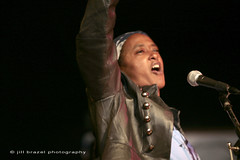
Word Warriors Theresa Davis


Word Warriors Theresa Davis
Originally uploaded by Split This Rock Poetry Festival

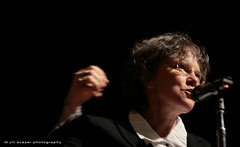
Carolyn Forché


Carolyn Forché
Originally uploaded by Split This Rock Poetry Festival

Carolyn Forché reads on Saturday night at the festival.

Photo by Jill Brzel

Wednesday, July 9, 2008

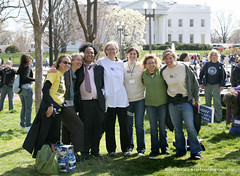
Sunday March


Sunday March
Originally uploaded by Split This Rock Poetry Festival

Naomi Shihab Nye, Melissa Tuckey, Regie Cabico, Sarah Browning, Jamie Jarvis, Yael Flusberg, Alix Olson

Part of the gang after the final day of Split This Rock 2008. Check out more photos on Flickr at http://www.flickr.com/photos/splitthisrock/ - we're adding more every day.

Monday, May 12, 2008

Help Patricia Smith Write Her A** Off, NYWC Write-A-THon

This just in from Patricia Smith:

I’m a participant in the third annual daylong writing marathon sponsored by the New York Writers Coalition, an organization that offers groundbreaking creative writing workshops to the city’s under-served communities.

Beginning at 10:30 a.m. on Saturday, May 17 at Manhattan’s Center for Independent Publishing, I’ll take my place along other ambitious wordsmiths, and—energized by your generous pledge—will write and workshop for EIGHT WHOLE HOURS (interrupted only by breaks for toilette and light sustenance).

Who knows? I may even be able to finish that blank verse novella I’m writing for our soon-to-be-ex President George Bush. All single syllable words of no more than three letters. No complex contractions. Pages to color.

Please visit my donation page (http://www.firstgiving.com/wordwoman) and help me help the NYWC do their wondrous work, teaching the power of the written word to seniors, the homeless and at-risk youth. Once a word reaches the page, it’s ready for the open air. And once it reaches the open air, it belongs to everyone.

Thanks in advance for your huge heart. For more information about the NYWC, visit http://www.nywriterscoalition.org/.

Hugs from here,

Patricia

Thursday, May 8, 2008

News from poet peace activist Henry Braun

Some news from this afternoon in Bangor, Maine. We, the "Bangor 6", were acquitted for our civil disobedience a year ago in Sen. Collins' office. The Split This Rock people might be encouraged by this.

Here's a description from a local newspaper about yesterday's court proceedings.
oday we were all acquitted. Let civil resistance to this war thrive!

Henry Braun


Local peace activists testify at Bangor trial

Robert Shetterly, left, and Doug Rawlings, two of the six people charged with criminal trespass and on trial for refusing to leave the office of U.S. Senator Susan Collins at the Margaret Chase Smith Federal Building in Bangor on March 7, 2007. The trial concludes Wednesday. (Lynn Ellis photo)

By Lee Sharkey

BANGOR - Two Farmington-area peace activists, Doug Rawlings and Henry Braun, had their day in court today.

Along with four other activists, they are on trial as a result of refusing to leave the Federal Building in Bangor, where Senator Susan Collins has an office, on March 7, 2007. They had come to the office to get Senator Collins, who had refused on numerous occasions to meet with them, to listen to their arguments for cutting off funding for the Iraq War.

Rawlings and Braun’s defense to the charge of criminal trespass is that their intent was not to break a law but to act on their responsibility as citizens to uphold a higher law, the Constitution of the United States, and to resist actions that undermine it. The United States is a signatory to the Nuremberg Principles, which define preemptive wars such as the Iraq War as war crimes. The Constitution states that international treaties agreed to by the United States are “the supreme law of the land.”

A veteran of the Vietnam War and a founding member of Veterans for Peace, Rawlings testified that he and other members of the organization have devoted their lives to abolishing war. He recounted a VFW conference at which Iraq war veterans pleaded with other vets to help them end this war.

“I had,” Rawlings said, “a sincere and deep obligation to speak to Senator Collins on behalf of the American soldier; I carried the veterans of the Iraq war with me.”

Braun is a poet who has been engaged since the 1960s in peaceful anti-war activities. Responding to the Assistant District Attorney’s question about why he chose to stay in the Federal Building rather than “go home,” he said, “I believed I was at home there, in the building with the Bill of Rights on the wall. It tells me that as a citizen I have the right to redress of grievances. I was grieving. We all are feeling the grief of this war.”

The trial continues tomorrow with closing arguments, Judge Michaela Murphy’s instructions to the jury, and the jury’s deliberations.

***

Last week, they were all acquitted!