Monday, June 13, 2011

Bahraini poet set to face verdict for protest reading - via Amnesty International

Ayat al-Qarmezi Image via Amnesty International
The following is an excerpt from an Amnesty International article. To read the full piece, click here.

Ayat al-Qarmezi, 20, a poet and student was arrested in March for reading out a poem at a pro-reform rally in the capital Manama. She has been charged with "incitement to hatred of the regime" and has reportedly been tortured while in detention.

...

Its lyrics include the lines "We are the people who will kill humiliation and assassinate misery/ Don’t you hear their cries, don’t you hear their screams?".

Friday, June 10, 2011

Split This Rock 5th Annual poetry contest

Split This Rock Announces its Fifth Annual Adult Poetry Contest

Benefits Split This Rock Poetry Festival
March 22-25, 2012 - Washington, DC

$1,000 Awarded for Poems of
Provocation & Witness


Naomi Shihab Nye, Judge


Naomi Shihab Nye will be featured at the 2012 Split This Rock Poetry Festival. She is the author and/or editor of more than 30 volumes. Her books of poetry include 19 Varieties of Gazelle: Poems of the Middle East, A Maze Me: Poems for Girls, Red Suitcase, Words Under the Words, Fuel, and You & Yours (a best-selling poetry book of 2006). She has been a Lannan Fellow, a Guggenheim Fellow, and a Witter Bynner Fellow. She has received a Lavan Award from the Academy of American Poets, the Isabella Gardner Poetry Award, the Paterson Poetry Prize, four Pushcart Prizes, and numerous honors for her children’s literature, including two Jane Addams Children’s Book Awards. In 2010 she was elected to the Board of Chancellors of the Academy of American Poets.

Prizes:

•First place receives $500; second and third place receive $250 each.
•Winners receive free 2012 festival registration.
•The 1st-place winner will be invited to read the winning poem at Split This Rock Poetry Festival, 2012.
•Winning poems will be published here, at SplitThisRock.org.

Details:

•Deadline: November 1, 2011 (postmark)
•Reading Fee: $20 – Reduced Recession Rate!


Submissions should be in the spirit of Split This Rock: socially engaged poems, poems that reach beyond the self to connect with the larger community or world; poems of provocation and witness. This theme can be interpreted broadly and may include but is not limited to work addressing politics, economics, government, war, leadership; issues of identity (gender, sexuality, race, ethnicity, disability, body image, immigration, heritage, etc.); community, civic engagement, education, activism; and poems about history, Americana, cultural icons.

2011 winning poems

2010 winning poems

2009 winning poems

2008 winning poems


Submission Guidelines (also available in Microsoft Word format):

•Send up to 3 unpublished poems, no more than 6 pages total, in any style, in the spirit of Split This Rock (see above).
•Postmark deadline: November 1, 2011
•Include one cover page containing your name, address, phone number, email, and titles of your poems. This is the only part of the submission which should contain your name.
•Enclose a check or money order for $20 (made out to “Split This Rock”) to:

Split This Rock Poetry Contest
1112 16th Street NW, Suite 600
Washington, DC 20036


Split This Rock subscribes to the Council of Literary Magazines and Presses Contest Code of Ethics.

Wednesday, June 8, 2011

How Split This Rock Measures Up: Gender

The recent VIDA count of the Best American series got us thinking: we claim to value diversity. How are we measuring up when it comes to gender?

At the 2008 festival, we had 28 featured poets. Of these, 2 were unable to attend, Lucille Clifton and Sharon Olds. Of the remaining 26 features, 12 were women (46%)

At the 2010 festival, we had 26 featured poets. Of these, 1 was unable to attend, Bruce Weigl. Of the remaining 25 features, 12 were women (48%)

For our 2012 festival, we have 7 confirmed poets, of which 6 are women (85%).

In our ongoing reading series, Sunday Kind of Love, we presented 91 poets between 2006 and 2010. Of these poets, 54 were women (59%).

In our Poem of the Week Series, we have posted 83 poems on this blog. 45 of these poems have been by women (54%)

So what does all this actually mean? For us at Split This Rock, it means that we are working toward our intent: To call poets to a greater role in public life and to bring the vital, important, challenging poetry of witness that is being written by American poets today to a larger and more diverse audience.

When we provide poets of both/all genders with a platform, we provide audiences with a way to hear and see multiple points of view. We provide audiences with diverse interests diverse speakers. When people see themselves reflected in who is speaking or writing, they may pay more attention to the language. And the language is what matters, what we believe can change the world.

Contemporary poets and other writers are telling the story of what it means to be alive today. But when women writers are slighted – in publications, prestigious readings, contests, teaching jobs, and the like – the experience of the majority of us is not reaching a wide audience. This significantly narrows the culture’s understanding of itself and reinforces the male perspective as the central one. We want young women to see our poets and think, "I have something to say, too. And I can say it. If she can speak, so can I." We want all people to be empowered by poetry, and that means thinking critically about who we uphold, who we feature, who we post, and who we read.

VIDA's stats reveal biases that we all need to examine within ourselves; even if our conversations aren't about gender, even if gender is not a criterion we examine, we still need think carefully about our assumptions.

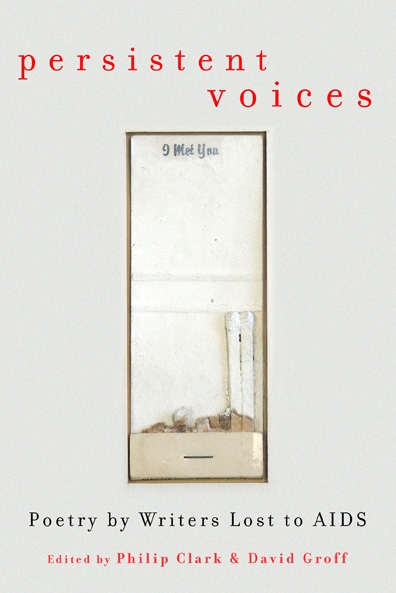
Sunday Kind of Love Features Readings from Persistent Voices June 19

June Sunday Kind of Love:

A Reading From

Persistent Voices:

Poetry by Writers Lost to AIDS

PV
With:

Philip Clark, R. Dwyane Betts, Jericho Brown, H.G Carillo, Richard McCann, and Joseph Ross


Sunday June 19, 2011

5-7pm


Langston Room - Busboys & Poets
2021 14th St. NW

A Cave Canem Fellow, R. Dwayne Betts is 2010 Soros Justice Fellow and winner of the 2010 NAACP Image Award for Outstanding Literary Debut for his memoir, A Question of Freedom. He has won a Holden Fellowship, a scholarship to the Bread Loaf Writers' Conference and was a finalist for the Ruth Lily Fellowship. His first collection, Shahid Reads His Own Palm, won the Beatrice Hawley Award given by Alice James Books in 2010. His poetry and essays have been published in Ploughshares, Crab Orchard Review, the Washington Post, the ABA Journal and other national literary magazines, periodicals and newspapers.

Jericho Brown worked as the speechwriter for the Mayor of New Orleans before receiving his PhD in Creative Writing and Literature from the University of Houston. He also holds an MFA from the University of New Orleans and a BA from Dillard University. The recipient of the Whiting Writers Award and fellowships from the National Endowment for the Arts, the Radcliffe Institute at Harvard University, the Bread Loaf Writers' Conference, and the Krakow Poetry Seminar in Poland, Brown is an Assistant Professor at the University of San Diego. His poems have appeared in journals and anthologies including, The Iowa Review, jubilat, Oxford American, A Public Space, and 100 Best African American Poems. His first book, PLEASE (New Issues), won the American Book Award.

H.G. Carrillo is the author of Loosing My Espanish, a novel, published by Pantheon Books and in paperback by Anchor Books. His short stories have appeared in Kenyon Review, Conjunctions, The Iowa Review, Glimmer Train, Ninth Letter, Slice and other journals and publications. Carrillo lives in Washington, DC, where he is Assistant Professor in the Department of English at The George Washington University, and is a member of the board of directors of the PEN/Faulkner Foundation. He is currently at work on a novel.

Philip Clark is the co-editor of Persistent Voices: Poetry by Writers Lost to AIDS. A writer and researcher living near Washington D.C., he serves as chair of the board of directors for the Rainbow History Project. His essays and other writings have appeared in such works as The Golden Age of Gay Fiction; The Lost Library: Gay Fiction Rediscovered; Fifty Gay and Lesbian Books Everybody Must Read; and The Oxford Companion to the Photograph. He is currently completing the late Reginald Shepherd's work editing the selected poems of Donald Britton and researching a book about H. Lynn Womack, Washington D.C.'s Guild Press, and gay life from the 1950s-1970s.

Richard McCann is the author of Mother of Sorrows, a collection of linked stories that Michael Cunningham has described as "almost unbearably beautiful." He is also the author of Ghost Letters, an award-winning collection of poems, and the editor (with Michael Klein) of Things Shaped in Passing: More 'Poets for Life' Writing from the AIDS Pandemic. His work has appeared in such magazines as The Atlantic, Esquire, Ms., Ploughshares, and Tin House, and in such anthologies as The O. Henry Prize Stories 2007 and Best American Essays 2000. For his work, he has received fellowships and awards from the Guggenheim Foundation, the National Endowment for the Arts, the Christopher Isherwood Foundation, and the Fine Arts Work Center in Provincetown. He lives in Washington, DC, where he is a professor at American University. He serves on the Board of Trustees of the PEN/Faulkner Foundation and is a Member of the Corporation of Yaddo.

Joseph Ross' poems appear in many anthologies including Poetic Voices Without Borders 1 and 2, Come Together-Imagine Peace, and the upcoming anthology Collective Brightness: GLBT Poets on Faith. His poems have also appeared in many journals including Poet Lore, whose editors nominated him for a Pushcart Prize. In 2007, he co-edited Cut Loose the Body: An Anthology of Poems on Torture. He directs the Writing Center at Carroll High School in Washington, D.C. and writes regularly at www.JosephRoss.net.

VIDA Reveals Gender Bias in Best American Series (and responses)

The following is an excerpt from VIDA's discovery of gender bias in the Best American Series. To read the full expose click here. For a discussion of Split This Rock's gender breakdowns, see the next post.

In the Best American Poetry Series, the percentage of women published in the anthologies was 39%. In twenty-four years of the Best American Poetry anthologies, there were only four years in which the number of published works by women were greater than those by men. ...

The Best American Series Count has given us more data and more angles from which to evaluate the state of gender in publishing. It has discounted some of the positions used to explain or support the disparity found in our 2010 Count, while supporting some of the others. And it has raised additional questions that must be asked in our ongoing discussion.

Clearly, counting alone is not enough. However, raising awareness is the first step toward affecting change. We hope that as we continue to disseminate the data, ask the difficult questions raised by our findings and engage in rigorous dialogue with members of our shared literary community, we’ll be embarking on a path toward parity in publishing.

There have been a variety of responses to the VIDA count. Here are a few. Please post more in the comments:
From The Poetry Foundation's Harriet Blog: Why it matters, of course, from writer and board member Cheryl Strayed: “The Best American series is the Academy Awards of the literary world. Publication there is often the most meaningful credit a writer has to offer when seeking further publication or a job. When I look at these numbers, I have to ask: What careers stalled because gender bias plays a role in preventing a writers’ work from reaching a national audience? What price do women writers pay in financial terms and cultural esteem?”

We have to say the data are hardly surprising–the anthologies aren’t known for being progressive aesthetically, either–but this isn’t an issue of progressivity; more largely, numbers trouble is something to be aware of.

From a comment on the VIDA Website: I am a young, female writer hoping to break into the genre of nonfiction. Numbers like these make me feel foolish, and then I wonder how many other young women picked up these compilations, literary magazine and periodicals and felt the same way. How many of them stopped writing because of it? To stifle an entire gender is reprehensible , but at least they are not doing it with our permission, or compliance, anymore.

From Danielle Pafunda, in the VIDA author discussion: As Cheryl says: look what we found. Also: look what you might consider next time! Best is a shifting and subjective appellation. If we want best to stay fresh, then it’ll help to look at what’s been done, what’s yet to do.

From The Missouri Review: One of the things worth noting here is that over the time period examined, BASS has always had a female series editor. Should we be surprised, then, that BASS has published and acknowledged more women compared to the other two Best American series? The same (male) series editors have been running Poetry and Essays for twenty five years. But do remember, the decision ultimately lies with each year’s guest editor: if we point to the series editor’s gender, we also, then, need to look at the gender of the guest editor. What’s the breakdown there?

Best American Essays: 12 women, 13 men

Best American Poetry: 7 women, 18 men

Best American Short Stories: 16 women, 17 men

Here, Best American Poetry looks quite bad. Again, it is also the only one that doesn’t have a short-list. But look at Best American Essays: plenty of women have been the guest editor. During that time period, only once has the guest editor selected more women than man (Joyce Carol Oates in 1991), and most years, it isn’t even close. Does that seem odd?

At The Missouri Review, and presumably at the other literary journals and magazines that first publish the work appearing in the Best American series, the sole criteria for publication is whether or not the writing is good (digression: I realize calling the work “good” or even discussing our criteria for “goodness” can become tangential, but I’ll try to stay on topic). Last year was my first year working on our Editors Prize. We read and re-read and discussed and argued and questioned. Including our winner, we published three stories that were originally Editors Prize submission. All three are written by women. Our prize winner in the essay is male; we published two other essays (non-contest) in our recent issue, both by women. Did the gender of the writers ever come up? No. At no time, not once, was the gender of the author mentioned. That’s not our criteria. In the same way that we don’t care about the race or ethnicity or MFA program of the author, gender is one of those things that, as literary editors, we don’t worry about.

Tuesday, June 7, 2011

Poem of the Week: Robin Coste Lewis


Verga

"...women don't want the men to go into the
bush because the women will only be raped but
the men will be killed...I have seen a woman
who was caught in the bush by several men.
They tied her legs to two trees while she was
standing. They raped her many times and before
leaving her they put stones in her vagina..."

Abshiro Aden Mohammed, Kenya, 2000
Dagahaley Somali Refugee Camp
from A Camel for the Son,
by Fazal Sheik


Before leaving her they put stones in her vagina
The men will only be raped but the stones will be killed
The bush caught many men to go into the stones
The stones will be killed by several trees before leaving
The bush tied the men to the trees in their vaginas
Before bush go to trees they kill many stones
Many men will be caught by the trees in the bush
Several trees will be raped by the bush and killed
Only the caught men will be stoned and bushed by the trees
Several men were caught by the trees before leaving
The men will be killed but the stones will only be treed
The stones put many trees into the men's killed vaginas
By the bush, the trees were raped only several times
Before leaving, the vaginas were seen standing in the stones

-Robin Coste Lewis


Used by permission.

Robin Coste Lewis' work has appeared in various journals, including The Massachusetts Review, Callaloo, The Harvard Gay and Lesbian Review, GCN, The Pocket Myth Series, and anthologized in Black Silk and The Encyclopedia Project, F-K. She was a finalist for both the War Poetry Prize in 2010, and the National Rita Dove Prize iin 2004. A graduate of Harvard's Divinity School, where she received a Master's of Theological Studies degree in Sanskrit and comparative religious literature, Lewis was the Samuel Valentine Cole Professor of Creative Writing at Wheaton College and Assistant Professor of Creative Writing at Hampshire College. She has been awarded residencies and fellowships by the Caldera Foundation, the Ragdale Foundation, the Headlands Center for the Arts, the Can Serrat International Art Centre in Barcelona and the Summer Literary Seminars in Kenya. Recently, she was awarded a Goldwater Fellowship by NYU's Creative Writing Program in Poetry. Born in Compton, California, her family is from New Orleans.


Lewis was on the panel The Poet as Historian in the 21st Century: A Rare Opportunity in Difficult Times at Split This Rock Poetry Festival: Poems of Provocation & Witness 2010.


Please feel free to forward Split This Rock Poem of the Week widely. We just ask you to include all of the information in this email, including this request. Thanks!

Split This Rock
www.splitthisrock.org
info@splitthisrock.org
202-787-5210


Monday, June 6, 2011

You Are My Mirror - Sarah Browning in Sojourners Magazine


The following is an excerpt from Split This Rock Director Sarah Browning's article in Sojourners, "You Are My Mirror: Poets resist anti-immigration laws with defiance, beauty, and social media" For the full article, click here.

Poets have always played this role, naming injustices and imagining alternatives, acting as visionaries for a society. In the United States, this tradition begins with our great democrat Walt Whitman and continues unbroken through the 20th century, through the Harlem Renaissance and the Black Arts Movement, but also through the Beats, feminist poets, and the Chicano Art Movement. Poetry and other art forms can combat despair, provide inspiration to those working in the trenches of movements for social change, humanize those we are taught to fear (whoever they may be), and build bridges across our differences, telling our human stories. A poem can be a history lesson -- sometimes the only one we have.