Friday, December 6, 2013

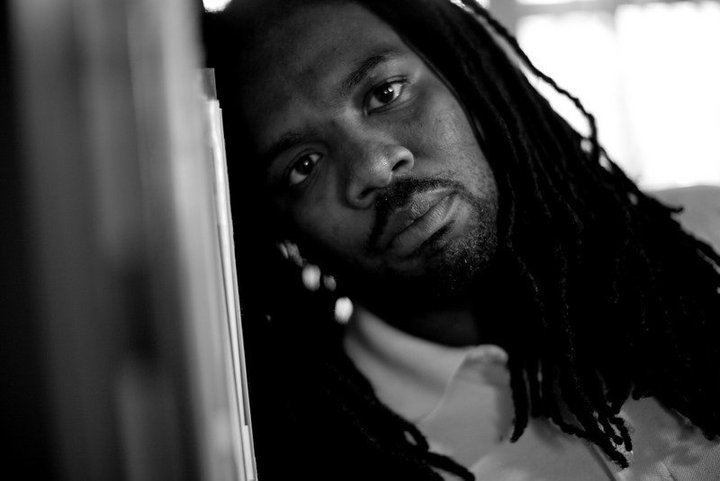
Poem of the Week: Daniel Nathan Terry


The 8th of May: A Vow

Upon seeing a video of a man in North Carolina firing his rifle
into a sign asking citizens to Vote Against NC Amendment One.


There are oaks that remember
what we would forget--the burn of the rope,
how a body takes on more weight
the moment it breathes its last, how
the earth below shoeless feet grows
hungry for the slaughtered. There are rooms
where paint has been rolled over
blood, where the body's salt has been
vacuumed into bags of dust, where the veneer
of a nightstand still bears the imprint
of a living hand's last message. Ghosts
of children and men and women hang
from fences, linger in the corners
of dorm rooms, of courtrooms, of churches.
This is how we deal with it around here, he said,
after emptying his gun into a plea for equality, and some people
were shocked by his quivering pride. I will try
not to think of him when I stand in a room
in DC and vow to continue to love the man
I have loved for 16 years. I will try not to remember
that 17 years ago, a friend of mine opened his door
to a cry for help from the other side, only to be robbed
then stabbed to death with his own kitchen knives
because the thief felt threatened that my friend--
while begging for his life--revealed that he was gay.
I will even try not to think of my grandfather
who cannot forgive me for loving the man
who held me steady as I purchased the dress my grandmother
was to be buried in. I will try not to think of the memory
of these oaks, of those fences, of some rooms. I will say I will
and mean carry on loving you until death. I will
think of the dorm room where we first made love,
I will think of the fence around our house
and its roses that change color in the heat. I will
think of Carolina oak who might remember
the night we kissed in the first bands of rain
from a hurricane just making landfall.


-Daniel Nathan Terry 

Used by permission.     

Daniel Nathan Terry, a former landscaper and horticulturist, is the author of three books of poetry: Waxwings (2012); Capturing the Dead, which won The 2007 Stevens Prize; and a chapbook, Days of Dark Miracles (2011). His poems and short stories have appeared, or are forthcoming, in numerous publications, including Cimarron Review, The Greensboro Review, New South, Poet Lore, and Southeast Review. He serves on the advisory board of One Pause Poetry and lives in Wilmington, North Carolina with his husband, painter and printmaker, Benjamin Billingsley.
 

Please feel free to forward Split This Rock Poem of the Week widely. We just ask you to include all of the information in this email, including this request. Thanks!

If you are interested in reading past poems of the week, feel free to visit the blog archive. 

Wednesday, December 4, 2013

December Sunday Kind of Love: David Keplinger & Daniel Nathan Terry

December
Sunday Kind of Love
Featuring:

David Keplinger &
Daniel Nathan Terry


Sunday December 15, 2013

5-7pm

Busboys & Poets
2021 14th St. NW
Washington, DC 20009

Hosted by
Sarah Browning & Katy Richey
$5 online or at the door

As always, open mic follows!
Co-Sponsored by Busboys and Poets
& Split This Rock


David Keplinger is the author of four poetry collections, most recently The Most Natural Thing (New Issues, 2013). He teaches in the MFA Program in Creative Writing at American University and is at work on a book about his great-great grandfather, a Civil War veteran falsely accused of desertion and incarcerated in Washington for nearly a year during the war. 
  
Daniel Nathan Terry, a former landscaper and horticulturist, is the author of three books of poetry: Waxwings (2012); Capturing the Dead, which won The 2007 Stevens Prize;and a chapbook, Days of Dark Miracles (2011). His poems and short stories have appeared, or are forthcoming, in numerous publications, including Cimarron Review, The Greensboro Review, New South, Poet Lore, and Southeast Review. He serves on the advisory board of One Pause Poetry and lives in Wilmington, North Carolina with his husband, painter and printmaker, Benjamin Billingsley.


David Keplinger photo by Jake Adam York

Friday, November 29, 2013

Poem of the Week: Yusef Komunyakaa


Thanks

 
Thanks for the tree
between me & a sniper's bullet.
I don't know what made the grass
sway seconds before the Viet Cong
raised his soundless rifle.
Some voice always followed,
telling me which foot
to put down first.
Thanks for deflecting the ricochet
against that anarchy of dusk.
I was back in San Francisco
wrapped up in a woman's wild colors,
causing some dark bird's love call
to be shattered by daylight
when my hands reached up
& pulled a branch away
from my face. Thanks
for the vague white flower
that pointed to the gleaming metal
reflecting how it is to be broken
like mist over the grass,
as we played some deadly
game for blind gods.
What made me spot the monarch
writhing on a single thread
tied to a farmer's gate,
holding the day together
like an unfingered guitar string,
is beyond me. Maybe the hills
grew weary & leaned a little in the heat.
Again, thanks for the dud
hand grenade tossed at my feet
outside Chu Lai. I'm still
falling through its silence.
I don't know why the intrepid
sun touched the bayonet,
but I know that something
stood among those lost trees
& moved only when I moved. 


-Yusef Komunyakaa 

From Dien Cai Dau (Wesleyan University Press, 1988). 
Used by permission.     

Yusef Komunyakaa's seventeen books of poetry include Taboo, Dien Cai DauNeon Vernacular, for which he received the Pulitzer Prize, Warhorses, and most recently The Chameleon Couch and Testimony. His many honors include the William Faulkner Prize (Universite Rennes, France), the Ruth Lilly Poetry Prize, the Kingsley Tufts Award for Poetry, and the 2011 Wallace Stevens Award. His plays, performance art, and libretti have been performed internationally and include Saturnalia, Testimony, and  Gilgamesh: A Verse Play. Komunyakaa's prose is collected in Blues Notes: Essays, Interviews & Commentaries (University of Michigan Press, 2000). He also co-edited The Jazz Poetry Anthology (with J. A. Sascha Feinstein, 1991), co-translated The Insomnia of Fire by Nguyen Quang Thieu (with Martha Collins, 1995), and served as guest editor for The Best of American Poetry 2003. He teaches at New York University.

Friday, November 22, 2013

Poem of the Week: Derrick Weston Brown


Despite

for Sunil Tripathi of Brown University, named a suspect in the April Boston Marathon Bombing by Reddit although he had been missing since mid-March. His body was found nearly two weeks later. And for Salah Eddin Barhoum, an unnamed "Saudi Man," and "Brown Running Man," and all those who fit a description. 


Your brown skin is not a bomb.
Your brown skin does not mean bomb.
Though they doctor pictures.
Though they cry cowards.
Though drones may have your name on rolodex.
Though they cry why do they hate us so, with the ball of their foot on your neck.
Though they stop and frisk.
Though they shun background checks.
Though they throw stones and hide their hands.
Though they stroke gun butts.
Though they fondle sleek barrels in their sleep.
Though they run their hands through shotgun shells like loose grain. 
Though their journalism is pale and piss colored.
Though they peer through their own monstrous veil.
Though they forget home grown rotted roots.
Though they pull weeds and crush seeds in others' gardens.
Though they flash your photos with reckless intent.
Though they posse up.
Though they scramble like keystone cops.
Though they shoot first.
Your brown skin is not a bomb.
Your brown skin does not mean bomb.
Your breath is good mornings.
Your eyes are promises backed by
prayers uttered from the backs of throats
of those who love first and question later.
Your brown skin is a country
unblemished
free.


-Derrick Weston Brown 


Used by permission.     

Derrick Weston Brown holds an MFA in Creative Writing from American University. He is the founding Poet-In-Residence of Busboys and Poets. He also teaches Creative Writing to High school and Middle school students in D.C. He is a native of Charlotte, North Carolina and resides in Mount Rainier, Maryland.  He was the 2012-2013 Writer-In-Residence of Howard County. His work has been published in such journals as, Warpland, Mythium, The Drunken BoatTidal Basin ReviewLittle Patuxent Review and was nominated for a Pushcart Prize in 2012. His first full length collection of poetry, Wisdom Teeth, was released in 2011 on Busboys and Poets Press/ PM Press.  

Please feel free to forward Split This Rock Poem of the Week widely. We just ask you to include all of the information in this email, including this request. Thanks!

If you are interested in reading past poems of the week, feel free to visit the blog archive.

Tuesday, November 19, 2013

"Here I Am" - New Poem for José Gouveia by Martín Espada - Please Help

Joe Gouveia leads panel on the rant,
Split This Rock Poetry Festival 2008. 

Photo by Jill Brazel.
Joe Gouveia -- community builder, poet, great guy -- is battling cancer. Again. He has done so much for poets, as a newspaper columnist, the host of a radio show, an anthologist (Rubber Side Down: The Biker Poet Anthology), an organizer of readings and workshops, and more.

Split This Rock invites our community to give back and contribute what you can to the Joe Gouveia Recovery Fund, here: http://www.gofundme.com/584zps

Poet and essayist Martín Espada, a good friend of Joe's, has written the following poem in tribute. We urge you to read it, repost it, and spread the word, as we pay tribute to Joe, help him cover expenses while he's hospitalized, and thank him for his own powerful voice, his big heart, and his generous spirit.


Here I Am
            For José “JoeGo” Gouveia

He swaggered into the room, a poet at a gathering of poets, 
and the drinkers stopped crowding the cash bar, the talkers stopped
their tongues, the music stopped hammering the walls, the way
a saloon falls silent when a gunslinger knocks open the swinging doors:
JoeGo grinning in gray stubble and wraparound shades, leather Harley
vest, shirt yellow as a prospector’s hallucination, sleeve buttoned
to hide the bandage on his arm where the IV pumped chemo through
his body a few hours ago. The nurse swabbed the puncture and told him
he could go, and JoeGo would go, gunning his red van from the Cape
to Boston, striding past the cops who guarded the hallways of the grand
convention center, as if to say here I am: the butcher’s son, the Portagee,
the roofer, the carpenter, the cab driver, the biker-poet. This was JoeGo,
who would shout his ode to Evel Knievel in biker bars till the brawlers
rolled in beer and broken glass, who married Josy from Brazil
on the beach after the oncologist told him he had two months to live
two years ago. That’s not enough for me, he said, and will say again
when the cancer comes back to coil around his belly and squeeze hard
like a python set free and starving in the swamp. He calls me on his cell
from the hospital, and I can hear him scream when they press the cold
X-ray plates to his belly, but he will not drop the phone. He wants
the surgery today, right now, surrounded by doctors with hands
blood-speckled like the hands of his father the butcher, sawing
through the meat for the family feast. The patient’s chart should read:
This is JoeGo: after every crucifixion, he snaps the cross across his back
for firewood. He will roll the stone from the mouth of his tomb and bowl
a strike. On the night he silenced the drinkers chewing ice in my ear,
a voice in my ear said: What the hell is that man doing here?
And I said: That man there? That man will live forever.

Martín Espada

Friday, November 15, 2013

Poem of the Week: Naomi Ayala

   
  No. 13, for Remembering


Two blocks away
where yellow cabs
zip by without stopping
and the prostitute with the skinny legs
asks for a cigarette
from under her giant,
black umbrella,

in the corner's rain
where some children
are dangerous,
can tell our future
and bet on broken love
between the dreams,

I don't know where my hands begin
and my heart ends.

Oak trees line the sidewalk,
small birds carry spring twigs
above fast-food waste,
and the bold races of rats,
like ghosts of a lost memory,
point to the day of the week.

I don't know where the face of change
is not my own face.

A cold wind picks up.
A man abandons himself
to a tambourine and harmonica--
not praising, not denouncing,
only leaving this place with this sound.

I don't know where we will
end up and begin

but I want to note
that we have been here,
that we too were invisible
and we too were seen.


-Naomi Ayala


From Calling Home: Praise Songs and Incantations  
(Bilingual Review Press, 2013)

Used by permission.   

A native of Puerto Rico, Naomi Ayala is the author of three books of poetry, Wild Animals on the Moon (Curbstone Press), This Side of Early (Curbstone Books: Northwestern University Press), and Calling Home: Praise Songs and Incantations (Bilingual Review Press). She is the translator of a book of poems by the Argentinean poet Luis Alberto Ambroggio, The Wind's Archeology (Vaso Roto Ediciones: Mexico), winner of the 2013 International Latino Book Award for Best Nonfiction Book Translation. Among her other recognitions are a Martin Luther King, Jr. Legacy of Environmental Justice Award and Special Recognition for Community Service from the U.S. Congress. Naomi received her MFA in Writing and Literature from Bennington College.

Tuesday, November 12, 2013

Split This Rock Freedom Plow Award for Poetry & Activism 2013

Eliza Griswold wins inaugural prize

On November 1, Split This Rock presented the inaugural Freedom Plow Award for Poetry & Activism, sponsored by the CrossCurrents Foundation, to Eliza Griswold at a beautiful gala ceremony. The event at the Goethe-Institut in DC was attended by well over a hundred guests and highlighted not only the phenomenal work of Eliza Griswold, but also that of award finalists Jorge Argueta, Elana Bell, Tim Z. Hernandez, and Wang Ping. 


Sarah Browning, executive director of Split This Rock, kicked off the evening and was followed by a riveting performance by Kosi Dunn, Hannah Halpern, and Amina Iro of the DC Youth Slam Team. 


To view more photos of the event please visit Split This Rock's Facebook page here (FB membership not required!). 

We also presented the following slideshow as part of the program, to highlight Griswold's work collecting and translating the folk poems of Afghan women, as well as the powerful work of the four finalists, Jorge Argueta, Elana Bell, Tim Z. Hernandez, and Wang Ping. The Freedom Plow Award honors and celebrates a poet doing innovative and transformative work at the intersection of poetry and social change.


E. Ethelbert Miller presented the award to Griswold, with the following words:

SPLIT THIS ROCK (this link will take you to E. Ethelbert Miller's page) 


There are times when language turns to the writer for comfort. There are times when it asks for forgiveness. Too often words begin in secret and slowly navigate through the streets of our society.

In a troubled and dangerous world the writer cannot wait at the station of history waiting for change to arrive. It is activism which nudges us, pushes us, compels us to do the work to make our world a better place.

This evening we honor the work as well as the writer.
We honor the writer in order to encourage the work to continue.

Life like poetry leans towards revision, the struggle for perfection, the reaching and the desire to make things better...

This is how one comes to the work of the person we honor this evening.


This evening we celebrate poetry, we break and share bread.
We know that words inhaled and exhaled are essential to people as air.

No one should suffocate because of the absence of beauty surrounding them.

Langston Hughes was a witness to the Great Migration of African Americans from the South to the North; blues and jazz dancing in and out of his work. To be a New Negro in the 1920's was to embrace the modern world. Unfortunately the Great Depression of the 1930's brought despair and poverty to many across the land. It was during this time of dark sadness that Langston's voice - split this rock. It was his voice that encouraged citizens to keep their hand on the Freedom plow. Hold on.

From the land to landays, from America to Afghanistan. From Langston to Eliza, there is still a word called hope. There is still a dream. Hold on.

Eliza Griswold, reporter, activist and poet is here this evening. She is here to receive an award that acknowledges her innovative and transformative work at the intersection of poetry and social change. Her voice encouraged other women's voices to push aside the curtains of silence - to express themselves - to split this rock of fear and overcome the weight of submission.

Martha Collins, Carlos 
Andrés Gómez, and I have been proud to judge the first Freedom Plow Award for Poetry & Activism.While making the selection we were reminded of the glorious work being done by poets around the country. Poets are not living and writing on the sidelines. They are engaged in trying to change the world. One poem strikes a match. One poem is a spark. One poet can push or pull us into tomorrow.

The future is bright because of Eliza Griswold. The poet Elizabeth Alexander always reminds us to keep the word "fabulous" in our vocabulary. To use it when one needs to use it. I need to use it now.

I introduce the fabulous poet and activist Eliza Griswold.


This year's Freedom Plow Award was a tremendous success and we greatly look forward to the next! Many thanks to everyone who made this incredible event possible, especially the award's primary sponsor, the CrossCurrents Foundation and cosponsors the Beacon Hotel, the Goethe-Institut Washington, and the Institute for Policy Studies. A shout-out to the award judges, to all the volunteers, and to everyone who came out to celebrate. What a night!